
 RSS
RSS Don't bend your TPU tube valve stem
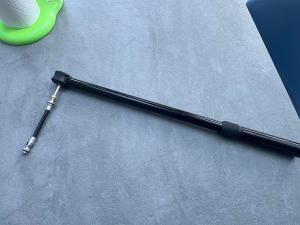
The Easter Fleche
At the Easter Fleche this year I had a puncture. I swapped in a fresh TPU tube roadside, pulled out the Silca Impero Ultimate II and pumped it up. Everything felt fine. I got back on the bike and finished the event without further incident.
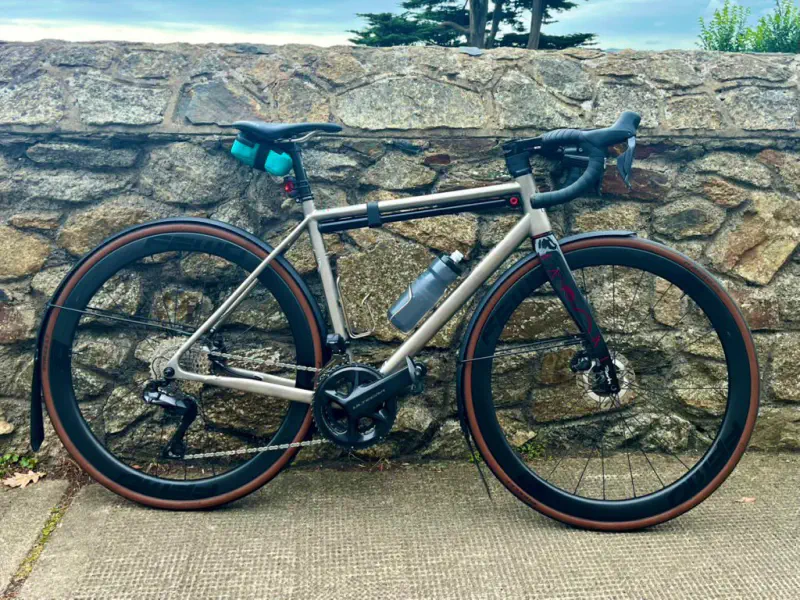
The Silca Impero Ultimate II mounted on the bike.
The Eoin McLove 600
A few weeks later I rode the Eoin McLove 600. Six hundred kilometres, no mechanicals, bike felt completely normal all the way through. When I got home and was checking the bike over, I noticed the rear valve stem looked slightly crooked — just a few degrees off-centre. I thought nothing of it, put the bike away, and went to bed.
The morning after
The next morning the rear tyre was soft.
It took me a moment to connect the dots. The crooked valve stem wasn’t just cosmetic — it had been stressed at the base during the Fleche pump and was leaking slowly. The Silca Impero is a frame pump: you brace it against the valve and push hard. That force isn’t purely axial. There’s always some lateral component, and for a butyl tube that’s fine — the valve stem is stiff enough to take it. But TPU valve stems are thinner and more flexible. Push hard at the wrong angle and they bend. Once bent, the seal at the base can start to weep.
The hack
Rather than relying on willpower to be more careful next time (mid-event, four hundred kilometres in), I built a small adapter from salvaged parts — all of which can be found easily online:
- the ABS hose from a broken Lezyne Pocket Drive (one end Schrader, one end Presta)
- a Schrader/Presta adapter
- a valve extender
- a valve core (seated inside the extender)
The extender threads onto the valve stem. The adapter bridges Presta to Schrader. The Lezyne ABS hose connects the adapter to the pump head. The hose is flexible — any angular force from the pump is absorbed by the hose, not transmitted to the valve stem.
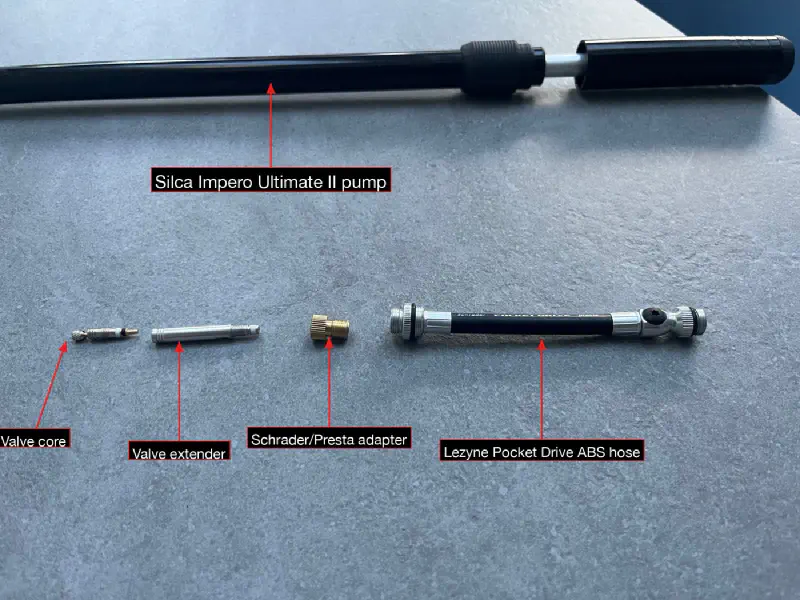
The four components: valve core, valve extender, Schrader/Presta adapter, and Lezyne Pocket Drive ABS hose — with the Silca Impero pump shown above for reference.
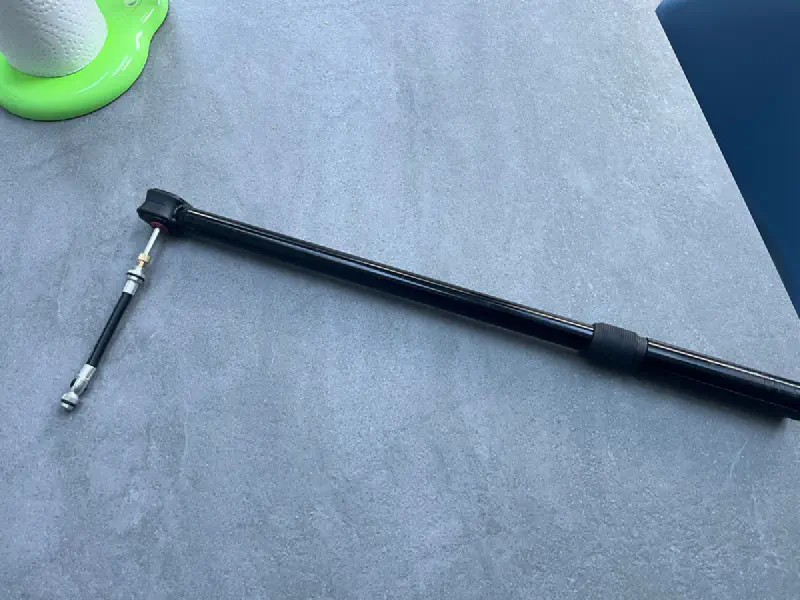
The adapter assembled and ready to use.
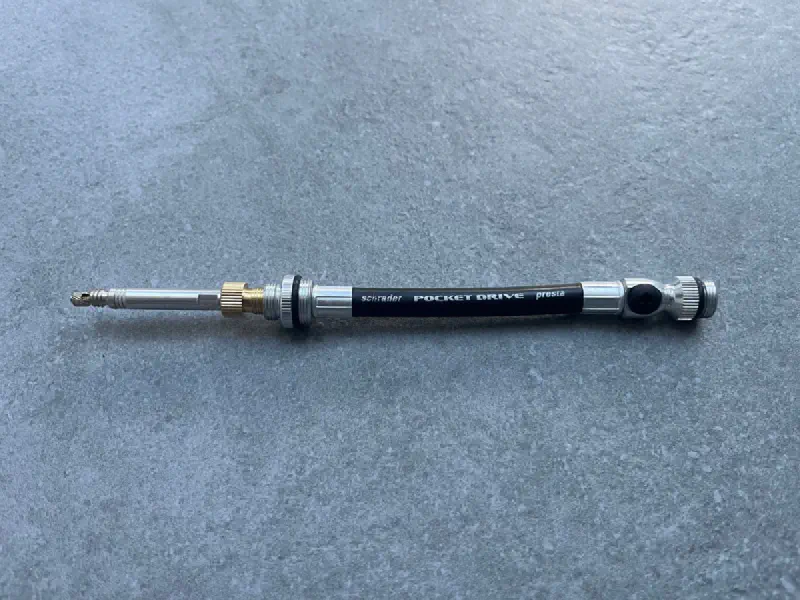
The assembled adapter: the left side connects to the pump, the right side threads into the TPU valve stem.
It adds about thirty seconds to the inflation process, which is nothing compared to diagnosing a slow leak four hundred kilometres into a 600.
TPU tubes are worth it. They are significantly lighter than butyl and robust enough for long-distance riding. But they reward care at the valve — especially when using a frame pump. If you are buying new, some manufacturers now offer TPU tubes with metal valve stems, which are much more resistant to this kind of damage. Worth considering if you pump roadside regularly.
Your turn
If you have a cleaner solution to this problem — a better adapter, a different pump technique, or something I missed entirely — I would love to hear it. Leave a comment below.